
That's a problem. Untreated exhaust corrodes equipment, puts workers at risk, and can trigger violations under the Clean Air Act. Facilities handling corrosive gas streams — chemical processing, plating, wastewater treatment — need a way to clean that air before it exits the stack.
This guide breaks down what a gas scrubber is, how it works, the main types available, and what drives cost.
Key Takeaways
- Strip acid gases, particulates, odors, and VOCs from exhaust before it leaves the stack
- Wet scrubbers capture contaminants in liquid; dry scrubbers rely on solid sorbents instead
- Material choice (polypropylene, PVC, FRP) determines corrosion resistance and system lifespan
- A scrubber matched to your process stream keeps the facility inside EPA emissions limits
What Is a Gas Scrubber?
A gas scrubber is an air pollution control device that "washes" contaminants out of an exhaust stream before the gas reaches open air. The contaminated gas is forced into contact with a scrubbing medium — a liquid, chemical reagent, or dry sorbent — where pollutants dissolve, react, or get physically trapped.
Industries that rely on scrubber technology include:
- Chemical processing plants
- Metal finishing and plating operations
- Semiconductor manufacturing
- Wastewater treatment facilities
- Pharmaceutical production
Gas scrubbers aren't the same as general "air scrubbers." Air scrubbers typically target indoor air quality in commercial or residential settings. Industrial gas scrubbers are built for a different job: handling high-concentration chemical pollutants in process exhaust, often under continuous, harsh operating conditions.
The EPA's Clean Air Act sets National Ambient Air Quality Standards for pollutants like SO2, particulate matter, and NOx. Major sources must obtain permits once emissions cross set thresholds: 100 tons per year for most pollutants, or 10 tons per year for a single hazardous air pollutant. A scrubber is often the practical way to stay under those limits.
How Does a Gas Scrubber Work?
The basic process is straightforward, even if the chemistry behind it isn't.
- Inlet — Contaminated gas enters the scrubber vessel through a duct
- Contact — Gas is forced through or against the scrubbing medium (liquid film, spray droplets, or dry sorbent)
- Capture — Pollutants are absorbed or neutralized by chemical reaction or physical capture
- Outlet — Clean gas exits, typically after a mist eliminator

The Role of Scrubbing Liquid
In wet systems, the scrubbing liquid does the heavy lifting. Caustic soda (sodium hydroxide) neutralizes acid gases like HCl and SO2, converting them into harmless salts. Plain water works for capturing particulates and some water-soluble gases.
According to EPA guidance, gaseous wet scrubbers commonly exceed 90% removal efficiency, with vendor-estimated inorganic gas removal reaching 95–99% in well-designed packed-bed systems.
Key Mechanical Components
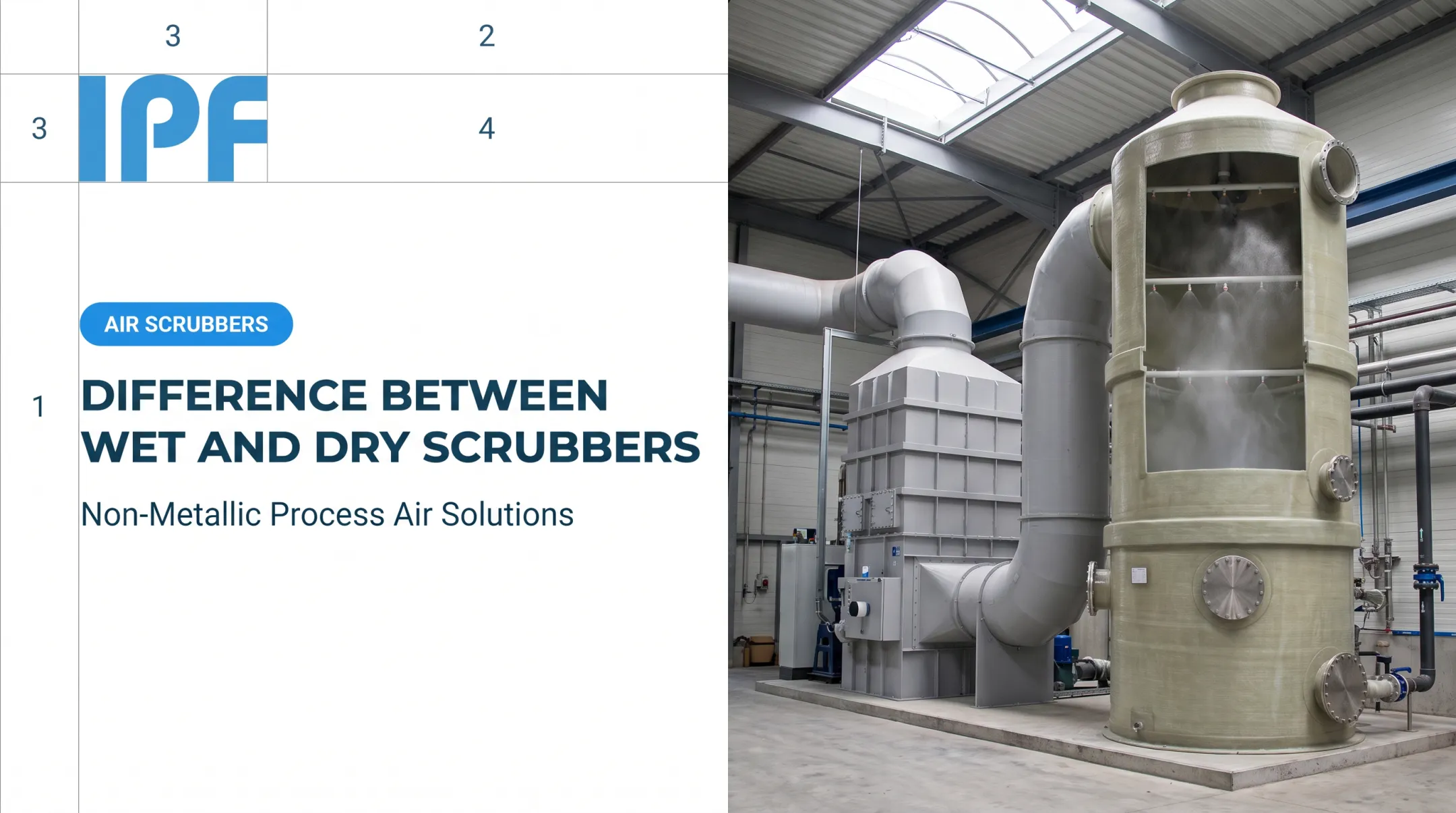
A typical wet scrubber includes:
- Packing media — Raschig rings or similar structures that maximize gas-liquid contact
- Spray nozzles or liquid distributors — deliver scrubbing solution evenly across the packing
- Mist eliminators — strip entrained liquid droplets before clean gas exits
- Blower or fan — drives airflow through the entire system
- Sump — collects liquid at the base for recirculation

That blower matters more than people realize. It pushes corrosive, often saturated gas through the vessel continuously, so it has to survive the same chemical attack as the scrubber itself.
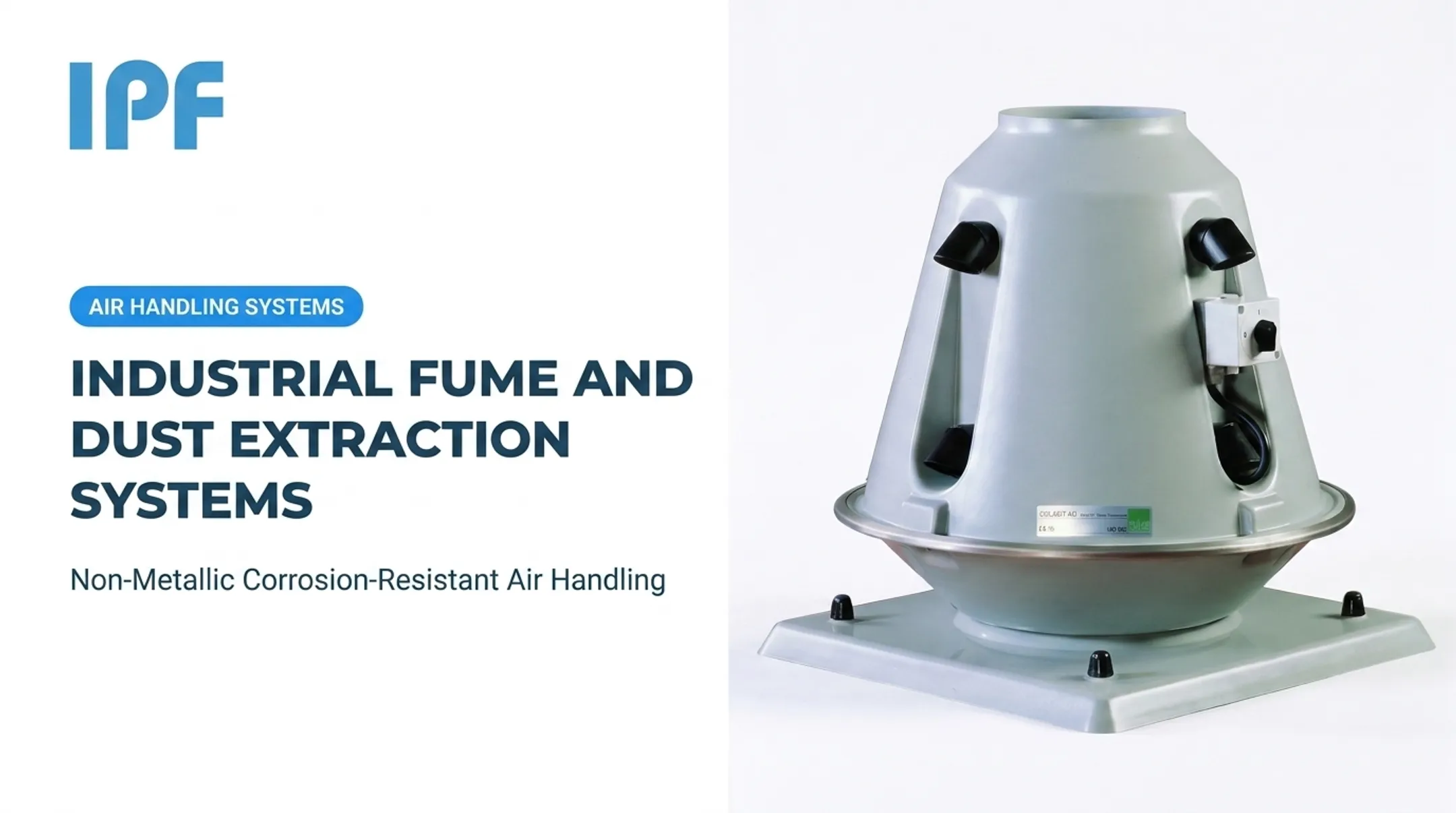
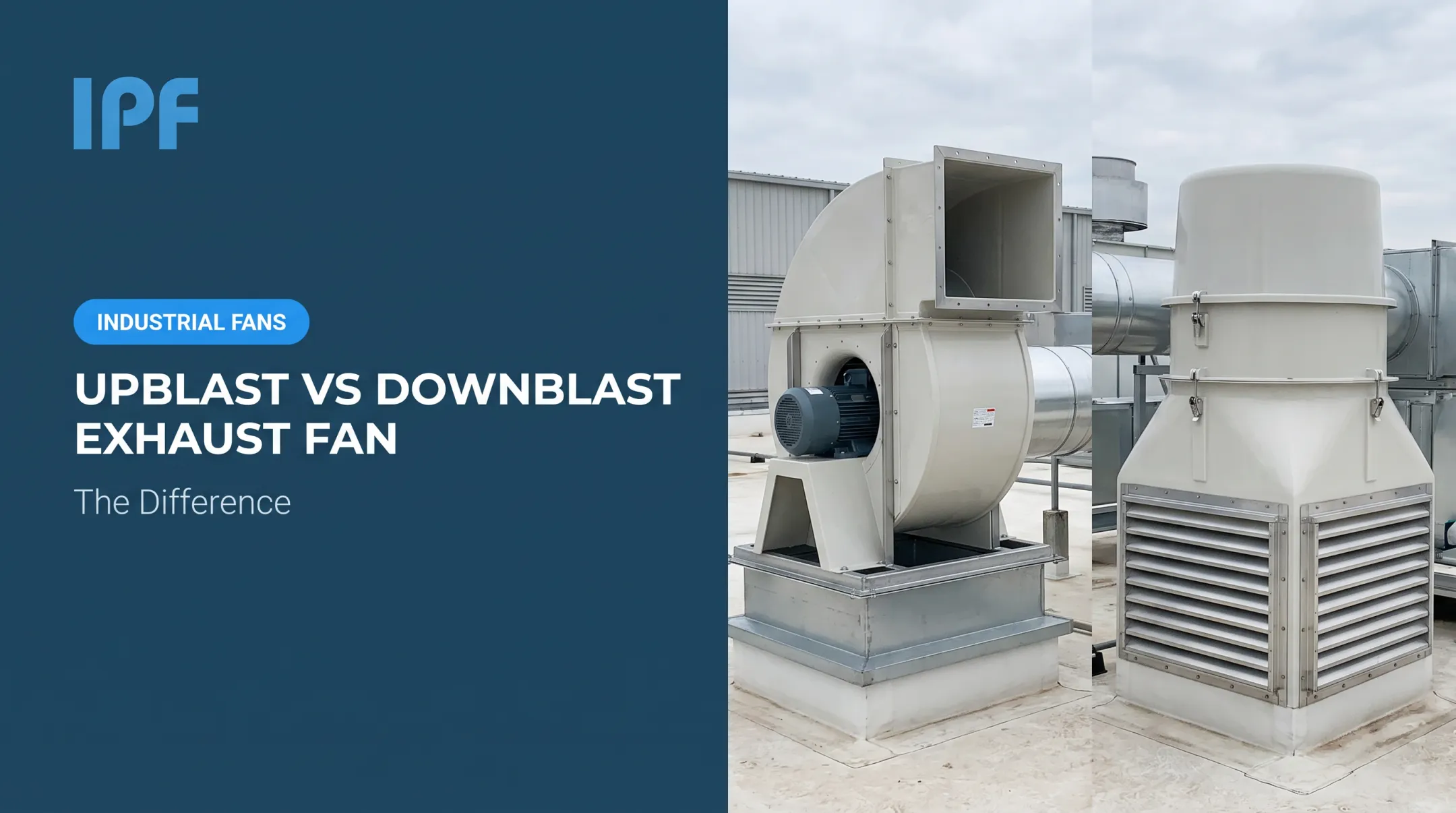
Fan construction is the weak link here. A metal fan corrodes quickly in an acidic or caustic airstream. IPF Colasit builds corrosion-resistant plastic and FRP fans with no metal in the airstream for exactly this duty.
How H2S Scrubbers Work
Hydrogen sulfide (H2S) scrubbing works a bit differently. The gas absorbs into an oxidizing or caustic solution — often sodium hydroxide combined with an oxidant — which converts H2S into elemental sulfur or sulfate. A 2001 study on packed-bed absorption found that a minimum pH of 11 was needed for efficient H2S capture using NaOH-based solutions, confirming caustic alkalinity as the active ingredient in the reaction.
Main Types of Gas Scrubbers
Wet Scrubbers
Wet scrubbers pass contaminated gas through a liquid — usually water or a chemical solution — to capture particulates and dissolve gaseous pollutants. Common subtypes include:
- Packed-bed/tower scrubbers — gas moves through packing material coated in liquid film; well suited to inorganic acid gases and moderate particulate loads
- Venturi scrubbers — gas accelerates through a narrow throat, atomizing liquid for high-turbulence contact; best for fine particulate matter
- Spray tower scrubbers — an open chamber with spray nozzles; lower pressure drop but generally lower mass-transfer efficiency
Dry Scrubbers
Dry scrubbers inject alkaline powders or slurries that react chemically with acid gases, forming solid salts rather than a wastewater stream. They're lower-maintenance than wet systems and avoid continuous liquid recirculation, which makes them a fit for facilities without on-site wastewater treatment. The tradeoff: dry systems are generally less efficient than wet systems for the same gas stream.
Wet vs. Dry: A Quick Comparison
| Factor | Wet Scrubbers | Dry Scrubbers |
|---|---|---|
| Removal efficiency | Higher (95–99% typical for inorganic gases) | Lower, sorbent-dependent |
| Waste generated | Wastewater or slurry | Solid salt waste |
| Maintenance | Higher (liquid systems, pumps) | Lower |
| Best fit | Facilities with wastewater treatment | Facilities without wastewater infrastructure |

Material construction often decides service life. Polypropylene, PVC, and FRP each hold up differently depending on the gas stream's chemistry and temperature. IPF Colasit's scrubber systems, including wet packed columns in vertical and horizontal configurations, are built in PVC or polypropylene as standard, with PVDF and other specialty plastics available for tougher chemistries.
What Gases Can a Scrubber Remove?
Scrubbers are typically matched to specific pollutant categories rather than treating "everything" equally well:
- Acid gases — SO2, HCl, NOx
- Hydrogen sulfide — H2S, common in wastewater and biogas applications
- Ammonia — NH3 from fertilizer, refrigeration, and wastewater processes
- Chlorine and chlorides — Cl2 and chloride vapors in chemical and water-treatment streams
- VOCs — volatile organic compounds
- Particulate matter — including PM10 and PM2.5

CO2 scrubbers are a separate category. These use amine-based solvents in packed absorbers, and DOE/NETL research on industrial CO2 capture reports 90–99% removal of inlet CO2 depending on system design and solvent choice. That's a specialized application, not a standard feature of a general acid-gas scrubber.
Removal efficiency always comes down to matching the right scrubbing chemistry, contact time, and equipment design to the specific pollutant and its concentration. A scrubber tuned for HCl won't necessarily perform well on ammonia without adjustments to reagent and pH control.
Gas Scrubber Costs and Considerations
Scrubber costs vary widely, and there's no honest way to quote a flat number. Pricing depends on:
- System size and required airflow
- Wet vs. dry configuration
- Materials of construction (PVC, polypropylene, FRP, or specialty plastics like PVDF)
- Gas stream chemistry, concentration, and inlet temperature
- Required removal efficiency The upfront investment can be significant. But facilities that skip corrosion-resistant materials often pay for it later through equipment failures, unplanned downtime, and regulatory fines. Clients using PVC, polypropylene, and FRP blowers have reported 25+ years of reliable service in harsh chemical environments, which changes the long-term math considerably. Getting the sizing right the first time matters. IPF Colasit has spent over 75 years supplying corrosion-resistant ventilation equipment to more than 40,000 facilities across North and South America. Its in-house chemical engineer designs and oversees scrubber fabrication for both wet packed columns and the fans that drive them. For scrubber-fed systems, a proper quote requires:
- Chemical list and concentrations
- Target removal efficiency
- Inlet gas temperature Have those details ready before reaching out for a consultation.
Frequently Asked Questions
What is a scrubber and what is it used for?
A scrubber is a pollution control device that removes contaminants (acid gases, particulates, VOCs) from an industrial exhaust stream before it's released. It's widely used in chemical processing, plating, and wastewater treatment to meet emissions regulations.
What are the main types of scrubbers?
Wet and dry scrubbers are the two primary categories. Wet scrubbers use liquid to capture pollutants, while dry scrubbers use solid sorbents.
How does a gas scrubber work?
Contaminated gas is forced into contact with a scrubbing medium (liquid, reagent, or dry sorbent) where pollutants dissolve, react, or get physically captured. Clean gas then exits through a mist eliminator or outlet duct.
How does an H2S scrubber work?
H2S gas is absorbed into a caustic or oxidizing solution, which converts it into elemental sulfur or sulfate. This neutralizes the toxic, corrosive gas before it can reach the atmosphere.
What gases can scrubbers remove?
Scrubbers commonly target acid gases (SO2, HCl, NOx), H2S, ammonia, chlorine, VOCs, and particulate matter. The right scrubber design depends on matching chemistry to the specific pollutant.
How much does a scrubber system cost?
Costs vary based on system size, wet vs. dry type, materials, and the gas stream's chemistry and temperature. Contact IPF Colasit for a quote based on your facility's gas stream and capacity needs.